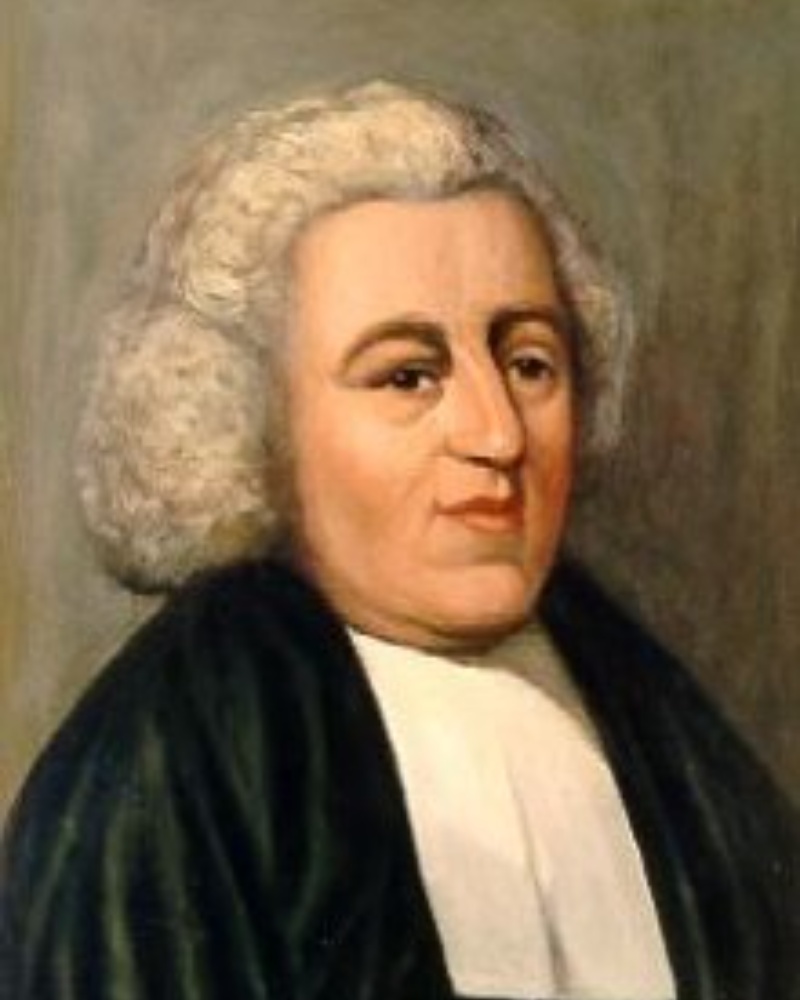
The story of John Newton is not merely a tale of a sailor, but a testament to the relentless pursuit of a God who refuses to let go. Born in London in 1725, John was the child of a mother who spent her days teaching him the scriptures and her nights weeping in prayer for his future. When she died before his seventh birthday, it seemed those prayers had fallen on deaf ears. By his teens, John had become a runaway, a rebel, and a blasphemer who took pride in inventing new ways to mock the divine. He was a man who chose the hardest paths, eventually finding himself in the belly of the slave trade—not just as a sailor, but as a man so broken and despised that he was once enslaved himself by a trader’s wife in Africa. He lived on scraps, mocked by the very captives he would later help transport. He was a 'wretch' in the truest sense, a man who had lost his humanity in the dark corridors of the Atlantic.
But the prayers of a mother are a long-lasting tether. In March 1748, aboard the ship 'Greyhound,' the Atlantic Ocean rose up to claim him. A monstrous storm tore through the timber, and as the ship began to fill with water, Newton found himself at the pumps, certain of his death. In that moment of absolute terror, a fragment of a verse his mother taught him flickered in his mind. 'Lord, have mercy on us!' he cried. It was not a theological statement; it was a drowning man’s gasp. God answered. The ship stayed afloat, and as the sun rose over a calm sea, the hard crust around Newton’s heart began to crack. His transformation was not a sudden lightning bolt but a slow, agonizing sunrise. He realized that the very grace he had mocked was the only thing holding the waves back. He eventually walked away from the slave trade, a decision that cost him his livelihood but saved his soul.
Newton’s life became a living sacrifice of penance and praise. He was ordained as a priest in the small village of Olney, where he poured his life into the poor and the broken. It was here that he penned 'Amazing Grace,' a hymn that was less of a poem and more of a confession. He spent his final years in London, standing as a spiritual giant and a mentor to William Wilberforce, urging him to fight until the scourge of slavery was wiped from the earth. As his body failed and his memory slipped, he famously whispered, 'My memory is nearly gone, but I remember two things: That I am a great sinner, and that Christ is a great Savior.' He died in 1807, just months after seeing the slave trade abolished. He began as a man who sold souls and ended as a man who helped set them free. His life remains an eternal echo that no one is too lost to be found. His epitaph says it best: he was a servant of slaves who was, by the rich mercy of Jesus Christ, restored and appointed to preach the Faith he once labored to destroy.