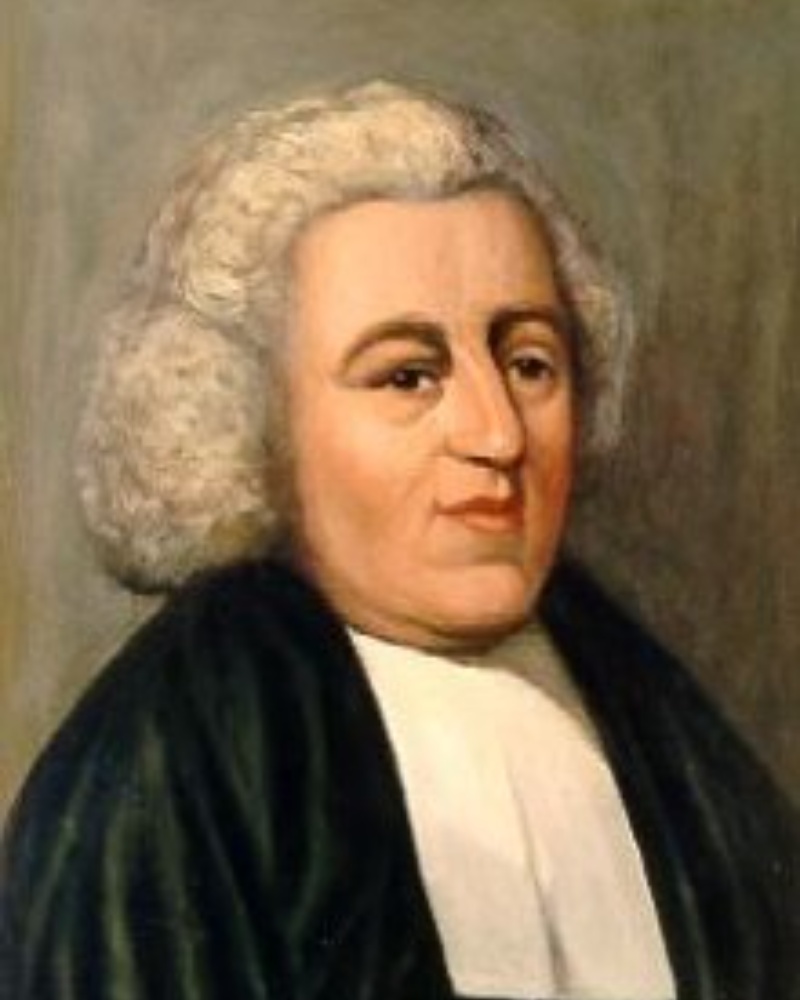
Amazing Grace
The story of Amazing Grace is not just the history of a hymn, but the chronicle of a soul's radical transformation. It begins in the 18th century with a man named John Newton. Born in London in 1725, Newton was the son of a ship captain. His mother, a devout Christian, died when he was only seven, leaving him to be raised by a father who took him to sea at age eleven. Newton’s youth was defined by rebellion and moral decay. He was press-ganged into the Royal Navy, deserted his post, and was eventually traded to a slave ship. Newton became a man who not only traded in human lives but was himself enslaved for a time in Sierra Leone, a servant of slaves. He was known for his foul language and mockery of the divine, a man who seemed beyond the reach of any redemption.
The turning point came on March 10, 1748. While crossing the Atlantic on the ship 'Greyhound', a violent storm struck. The ship began to fill with water, and as Newton pumped water from the hold, he realized the vessel was moments from sinking. In a moment of sheer desperation, he cried out, 'Lord, have mercy on us!' That night, the storm abated, and the ship survived. Newton called this his 'Great Deliverance.' Although his conversion was not immediate—he continued in the slave trade for several years—the seed of grace had been sown. He eventually left the sea, studied theology, and was ordained as a priest in the Church of England in 1764, serving in the small village of Olney.
In Olney, Newton became a beloved pastor and a close friend of the poet William Cowper. Together, they wrote hymns for their congregation. For a New Year's Day service in 1773, Newton wrote the words to 'Faith's Review and Expectation,' based on 1 Chronicles 17:16-17. These words would eventually become known as 'Amazing Grace.' The lyrics were a deeply personal reflection of his own life—a 'wretch' who had been saved by an undeserved favor. Newton spent the rest of his life fighting against the very slave trade he once profited from, joining forces with William Wilberforce to see it abolished. The hymn crossed the Atlantic to America, where it found its iconic melody, 'New Britain.' It became an anthem of hope during the Civil War, a song of solace during the Trail of Tears, and a powerful cry for justice during the Civil Rights Movement. Today, it remains a universal testament to the possibility of change and the enduring power of forgiveness.