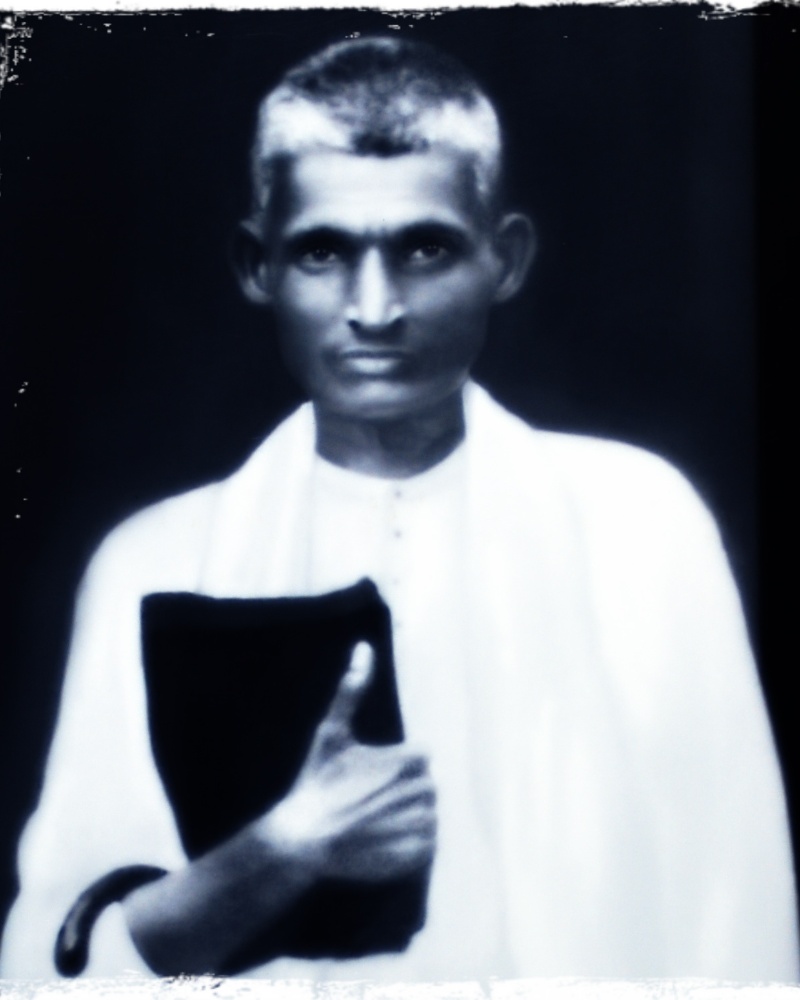
Aswasame Enikkere Thingeedunnu
The midnight hour is often when the human soul faces its most terrifying quietness. It was during one such heavy night that Sadhu Kochukunju Upadeshi sat awake in his humble dwelling in Kerala. He had lost everything that the world deemed valuable: his pockets were empty, his fields were no longer his own, and the physical absence of his deceased children hung like an unbearable weight in the silent rooms. The enemy of souls whispered heavily into his ear, telling him that he was abandoned, that his sacrifices for the Gospel were in vain, and that there was no comfort left for a man so thoroughly crushed by life.
Kochukunju closed his eyes, but he did not weep in despair. Instead, he entered into deep intercession. He began to look past his immediate circumstances and focused his spiritual gaze entirely on the cross of Calvary. In that space of deep brokenness, the Holy Spirit flooded his heart with a peace that bypassed human understanding. He realized that when an earthly vessel is completely emptied of the world, it becomes capable of holding the boundless comfort of God. The revelation was so overwhelming that it demanded to be sung. He picked up his pen and wrote the triumphant opening words: "Aswasame enikkere thingidunnu, aamodathodathu paadiduvaan" (Much comfort is crowding and welling up within me, to sing about it with great joy).
He wrote the song as a direct declaration of warfare against depression and doubt. Every stanza was a theological anchor. When he penned the lines about this world being a changing wilderness, he was testifying to his own economic ruin, declaring that the loss of his lands meant nothing because his true citizenship was in heaven. He wrote about the fleeting nature of human relationships, explicitly anchoring his broken heart in the truth that even if a mother forgets her child, Christ would never forsake him. The song was completed before the break of dawn, serving as his personal victory banner over suffering.
When Kochukunju first sang this hymn at an open-air convention, the atmosphere transformed. It was not a song of entertainment; it was a heavy, spiritual dynamic that swept through the brokenhearted audience. People who were contemplating suicide, families ruined by poverty, and believers weeping over graves found themselves infused with supernatural strength. It became the definitive anthem of the suffering church in Kerala. For nearly a century, "Aswasame Enikkere Thingeedunnu" has been the chosen song sung beside the beds of dying saints and during the darkest nights of faithful pilgrims, reminding the global church that our greatest comfort is never the absence of trouble, but the overwhelming presence of the Comforter.