What a Friend We Have in Jesus
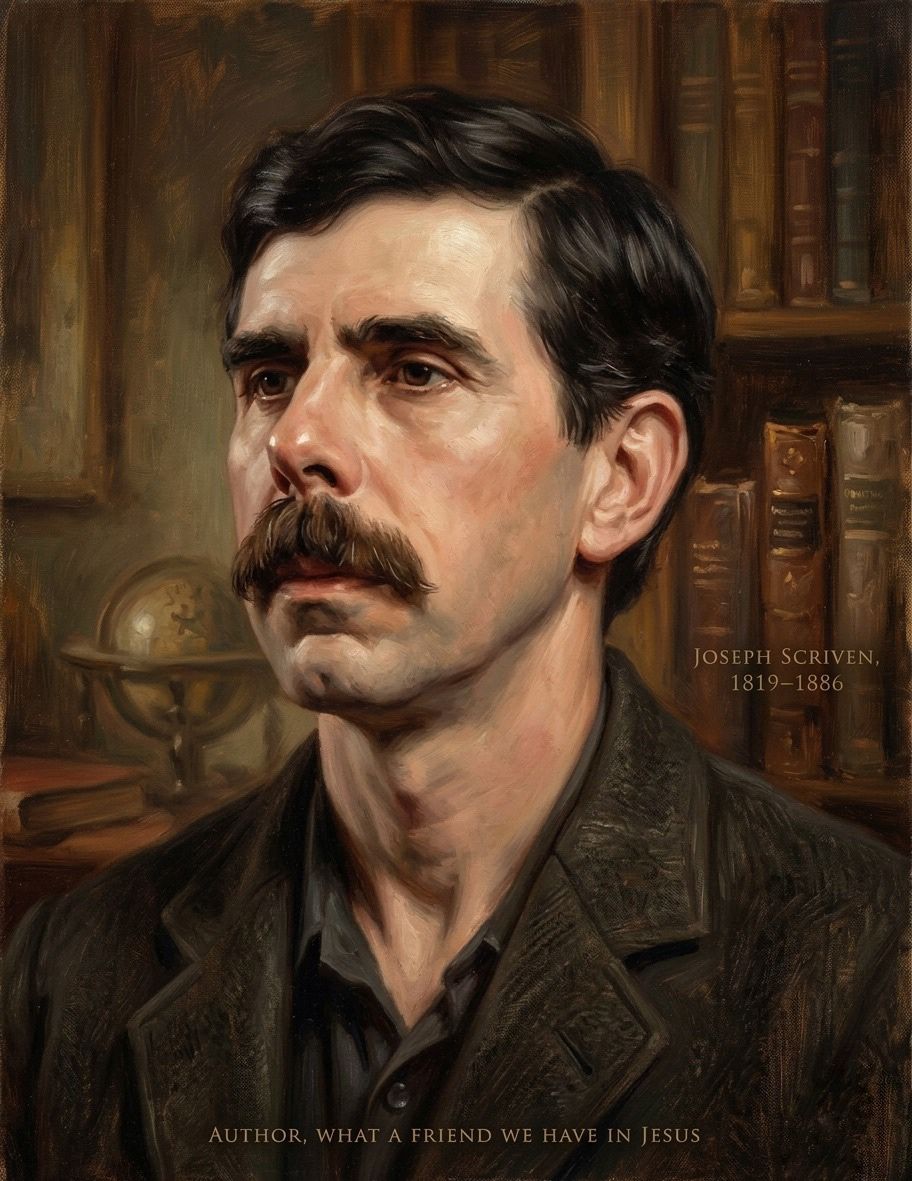
True masterpieces of faith are rarely written for the masses; they are almost always written for an audience of one. In 1855, Joseph Scriven was living a harsh, impoverished life in Canada, cutting wood for widows to survive. Across the Atlantic Ocean, in Ireland, his beloved mother had fallen severely ill. Scriven was completely broke. He did not have the money to book a ship passage to return home and sit by her bedside. The sheer helplessness of being thousands of miles away from his dying mother threatened to break his already fragile heart.
In the dim light of his small, unheated room, Scriven did the only thing he could do. He prayed, and then he picked up a pen. He wanted to send his mother an anchor for her soul, something to remind her that even in the darkest valleys of physical pain, she was never truly alone. He wrote a deeply personal poem and simply titled it "Pray Without Ceasing." He did not write it to be published in a hymnal. He wrote it as a private theological love letter to his weeping mother.
The lyrics perfectly distilled Scriven’s entire tragic life. When he wrote about carrying "all our sins and griefs" to God, he was remembering the two brides he had buried. When he wrote "O what needless pain we bear," he was reflecting on the years he spent trying to carry his broken heart on his own shoulders before finally surrendering it to Christ. He folded the piece of paper, mailed it to Ireland, and assumed it would simply comfort his mother in her final days.
However, a poem born in such an agonizing crucible of suffering could not remain hidden. A friend who was visiting his mother saw a copy of the poem, realized its profound spiritual weight, and had it published anonymously. It eventually found its way into the hands of Charles Converse, an American attorney and composer, who wrote the iconic, comforting melody we know today. For decades, millions of people sang the hymn without having any idea who wrote it. It wasn't until a neighbor was sitting with Scriven shortly before his death in 1886 that the author was finally revealed. When the neighbor asked if he had written the famous hymn, Scriven gently replied, "The Lord and I did it between us." Today, "What a Friend We Have in Jesus" remains a universal lifeline, teaching the global church that Jesus is not a distant deity, but a friend who sits with us in the dirt.